
From a Rajkot workshop to a branded online store
An illustrative story of a small kitchenware manufacturer's journey from selling only through local distributors to running their own branded store.
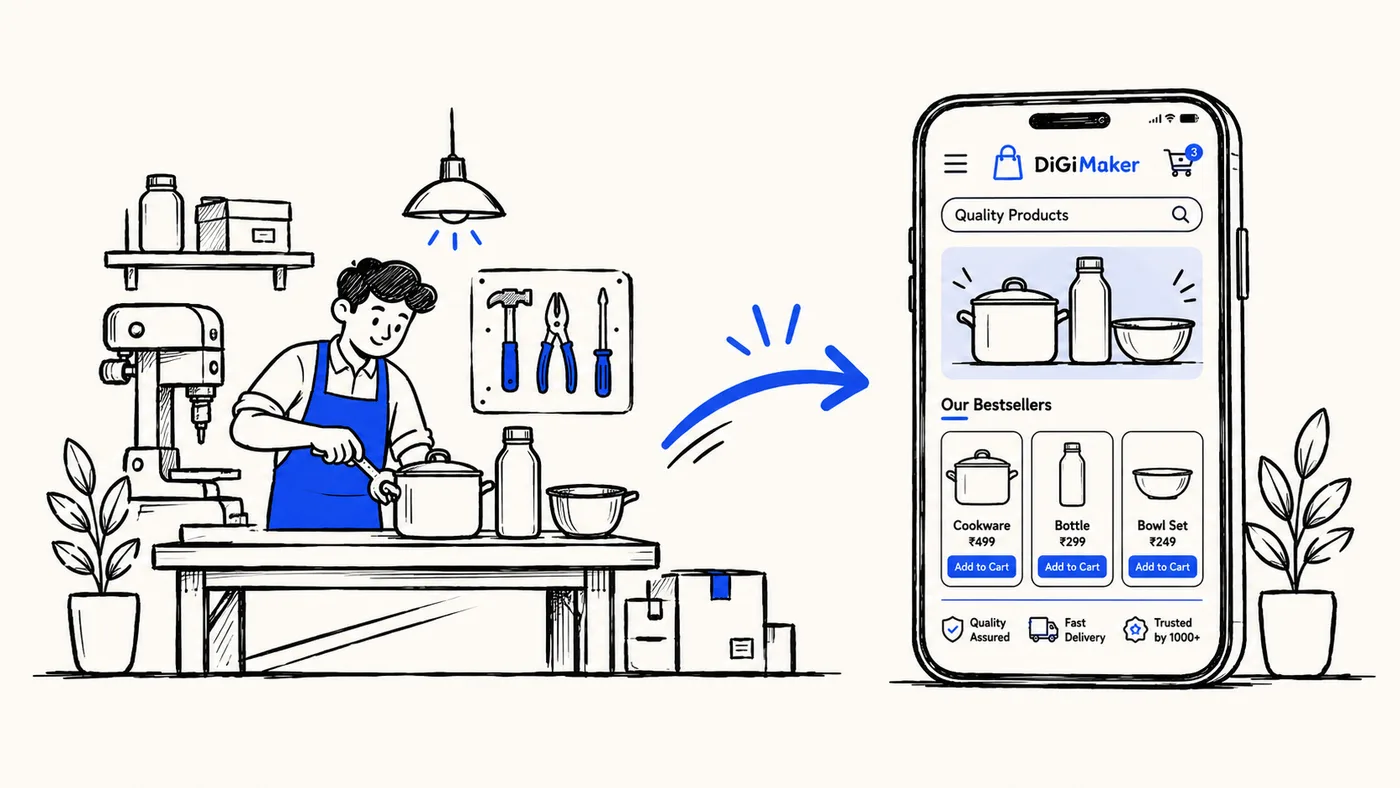
For fifteen years, a family workshop on the edge of Rajkot made stainless steel kitchenware — the kind of tawas, kadhais, and lunch boxes you’d find in kitchens across Gujarat. Good product, honest pricing, a loyal base of local distributors. But every single sale went through someone else: a distributor, a wholesaler, a shop owner three cities away who put their own sticker on the box before it ever reached a customer.
The workshop’s owner had a phone full of WhatsApp orders from people who’d seen the products at a relative’s house and asked, “Where do I buy this?” The honest answer was always the same: “I don’t sell directly — you’ll have to find a shop that stocks us.”
That’s the gap DiGiMaker exists to close.
The problem wasn’t the product
The products were never the issue — they were already good enough to survive fifteen years of word-of-mouth demand with zero marketing. The problem was structural: there was no way for a customer to simply pay and receive an order directly from the maker. Every sale had to pass through a middleman who took a cut and, more importantly, took the relationship. The workshop never knew who was actually buying their kadhais, what they’d buy next, or how to reach them again.
Building the store
Getting online didn’t mean hiring a developer or learning anything technical. It looked like this:
- A short onboarding call to understand the product range and pick a starting theme that suited a clean, practical kitchenware brand.
- Uploading the catalog — photos the workshop already had on their phone, organized into categories: cookware, storage, serveware.
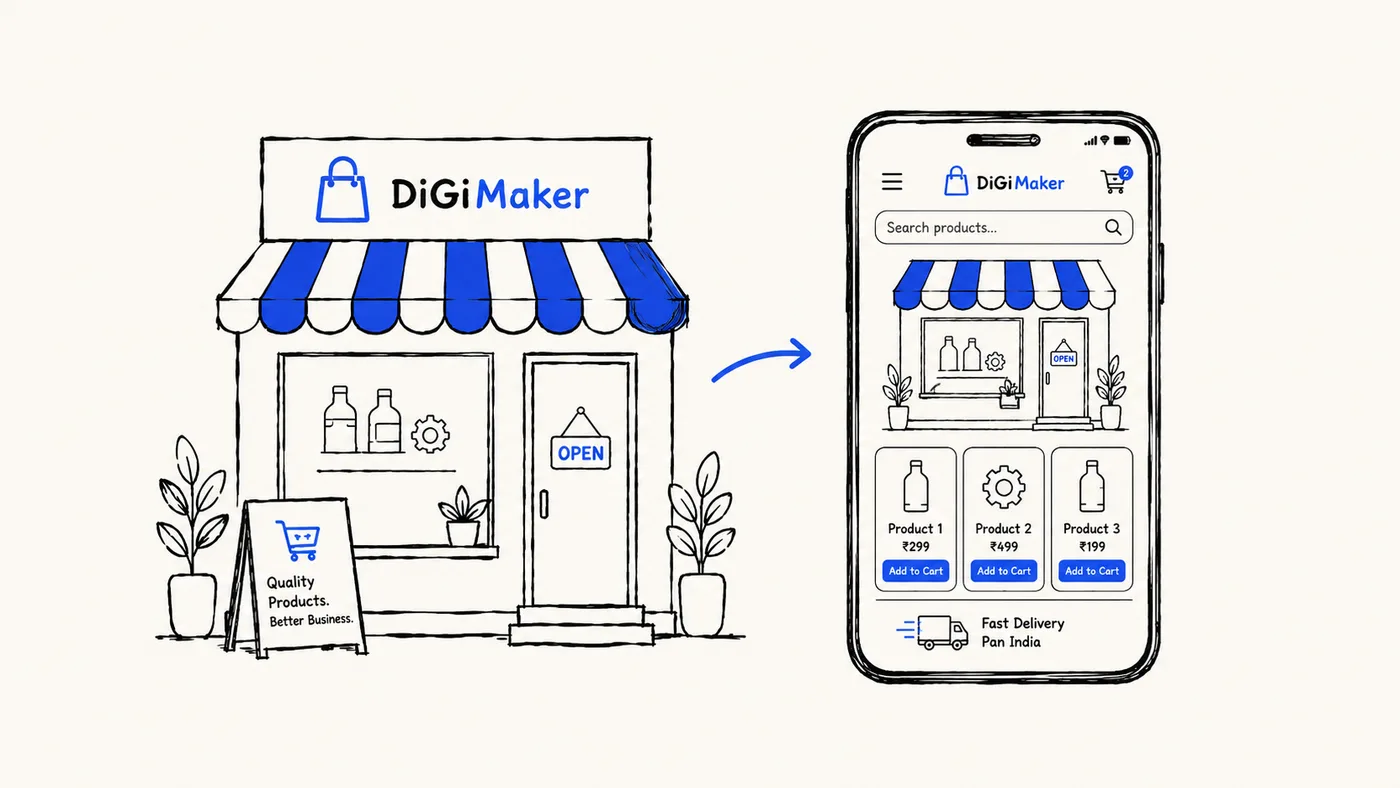
- Publishing the store, live within days at a
.digimaker.inaddress, with the workshop’s own name and logo front and center for the first time. - Turning on Cash on Delivery alongside online payments — because in Tier 2 and Tier 3 India, a lot of first-time online buyers still trust COD more than paying upfront to a brand they’ve never bought from before.
What changed
Within the first few weeks, something simple but significant happened: a customer who’d only ever bought through a local shop placed an order directly, paid on delivery, and left a message on WhatsApp saying they’d order again next month. That’s a relationship the workshop now owns — not a distributor.
Over time, the store became a second, growing channel alongside the existing distributor relationships — not a replacement, but an addition. Every order captured a phone number, a name, a repeat customer the business could reach again without paying a middleman for the introduction.
The part that matters most
None of this required the workshop to become a “tech business.” The owner still spends their day on the shop floor, not in front of a dashboard. What changed is that the products now have a front door with the workshop’s own name on it — one that’s open to anyone, anywhere, at any hour, without needing a distributor to unlock it.
That’s the whole idea behind Factory to Digital Market: the making doesn’t change. What changes is who gets to sell it, and who gets to keep the relationship with the person who bought it.